
Gardening, Strength, and Nervous System Health
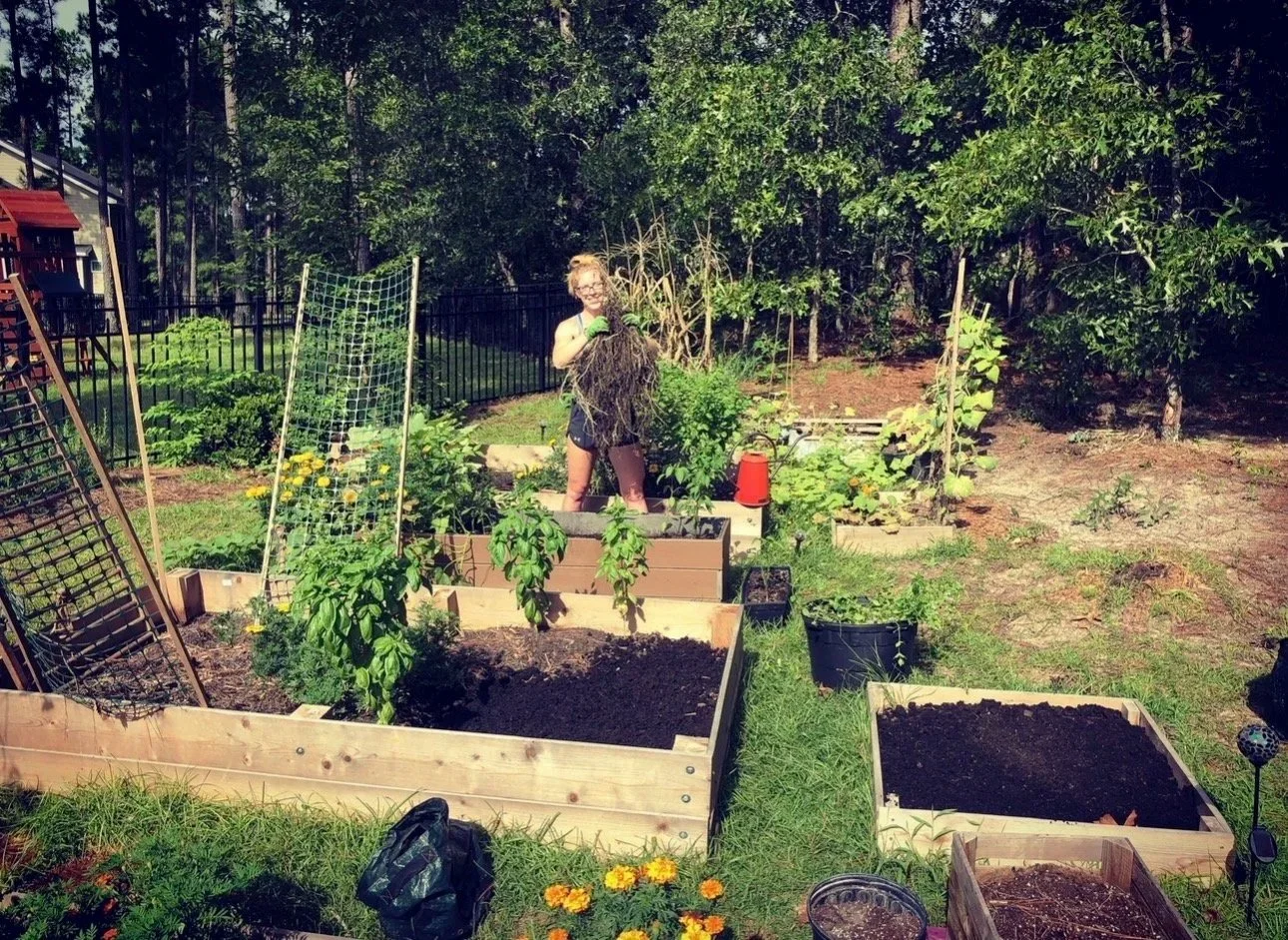
A Return to the Garden
Lately gardening has been on my mind frequently.
As we move into spring, I’ve been feeling a sense of newness in my own life. A kind of restoration. The past year has involved a lot of healing for me. Learning how to slow down more, rest when I need to, and center myself again.
Interestingly, that process has been bringing me back to something I started years ago: gardening.
I first started gardening during the early days of COVID. Back then the world felt uncertain and strange, like a fever dream, and planting things felt like one small way to create life and stability in the middle of all of it. It gave me a sense of purpose and focus.
Looking back now, I realize gardening was healing parts of me I didn’t fully understand yet.
There’s something about being outside in the fresh air, working with your hands, and creating something from the soil that settles the nervous system. It slows you down in a good way. Your attention comes back to what’s right in front of you.
At the time I just knew I loved the way it made me feel.
Now six years later, I feel that pull again.
Not because I’m trying to get back to who I used to be, but because the life I’m building now feels more aligned than it ever has. Spending time outside, creating something, growing things, and caring for my space just feels like a natural extension of that.
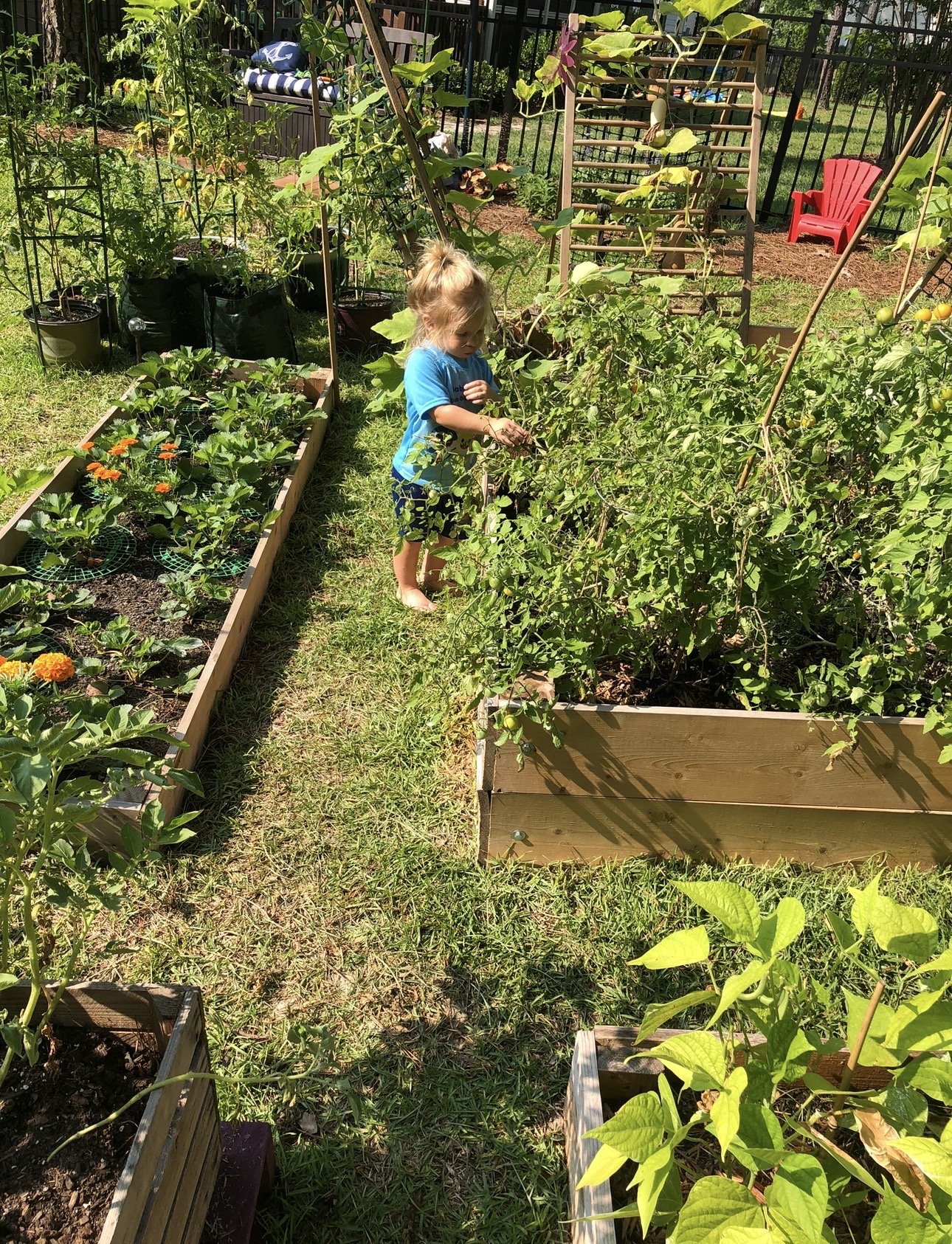
Gardening also holds a lot of memories with my kids. Some of my favorite days were the ones we spent outside digging in the dirt, planting seeds, watering beds, and checking every day to see if anything had started growing yet. We just hung out, learned, laughed, and created together.
Those moments mattered.
Life today pulls us in so many directions. Work, schedules, screens, notifications, responsibilities and coparenting schedules. It’s easy to move through entire weeks without slowing down long enough to breathe.
Gardening interrupts that pattern.
It gives you a reason to step outside, work with your hands, and pay attention to the natural world again.
It also reminds me how important it is to know how to grow food and pass that knowledge on to my kids. Even if it’s just a small garden, there’s something empowering about knowing how food grows and how to care for the land that produces it.
And there’s another piece of it I’ve noticed.
When I take care of my yard and garden, my home feels different. More peaceful. More alive. Like the space we live in is being looked after.
For me, tending a garden feels like a quiet way of showing gratitude for the life and home we’ve been given.
Not in some grand way.
Just in the simple act of caring for what’s already here.
A Modern Version of the Victory Garden
Gardening also makes me think about our history as a society and something people used to do more often: victory gardens.
During both World Wars, families all over the country grew home gardens so they didn’t need to rely on grocery stores and to keep their families from starving. Vegetables were planted in backyards, community spaces, and even small city lots.
It wasn’t about perfection.
It was about participation.
People wanted to contribute and take care of their families.
That idea still resonates today, just in a different way.
Most of us rely completely on grocery stores and rarely think about how food actually gets to us. But the last several years reminded many people how complex those systems really are.
Growing even a small amount of food changes your perspective.
You begin to notice the seasons.
You start paying attention to soil quality, sunlight, and rainfall.
Food stops being something abstract and becomes something you’re connected to.
You get to control the products that are used in growing the foods you consume.
For me, it’s not only about becoming completely self-sufficient.
But there is something grounding about knowing that if I want to, I can grow food for my family. And there’s something meaningful about passing that knowledge on to my kids.
It’s an important skill that helps build confidence and independence.
In that way, a garden today can feel like a modern version of a victory garden. Not fully driven by crisis, but by the desire to reconnect with the land and remember that we’re capable of creating and sustaining things ourselves.
What Research Says About Gardening and Well-Being
Researchers have been studying gardening for years, and the findings line up with what many people experience intuitively.
A large review of gardening studies found that people who garden regularly report improvements in life satisfaction and overall well-being, along with reductions in depression and anxiety.
The authors summarized the results this way:
“Gardening was associated with reductions in depression and anxiety and increases in life satisfaction, quality of life, and sense of community.”
(Soga, Gaston & Yamaura, 2017)
Studies on time spent in natural environments show similar patterns. Exposure to green spaces has been linked with improved mood and reduced stress.
There’s also interesting research related to soil itself.
Scientists have identified beneficial soil microbes, including one called Mycobacterium vaccae, that appear to stimulate serotonin production in the brain. Serotonin plays a role in mood regulation and emotional well-being.
In simple terms, spending time outside and working with soil may support the same brain chemistry associated with feeling calm and balanced.
But anyone who has spent time in a garden probably already senses this.
You slow down.
Your breathing changes.
Your mind gets quieter.
You actively live in the present moment.
Soil, Sunlight, and Grounding
Gardening is one of the few activities where you interact directly with the earth.
Your hands in soil.
Your body in sunlight.
Your attention focused on the environment around you.
Sunlight helps regulate circadian rhythm and sleep cycles. Being outside encourages functional movement rather than long periods of sitting.
But there’s also a mental shift that happens.
Working with plants requires patience and observation. You start paying attention to the weather, the soil, the insects, and the pace at which things actually grow.
It pulls you out of the constant stimulation of day to day life [stress] and back into something simpler, deeper, more connected.
For many people, that shift alone is incredibly regulating for the nervous system.
Gardening as Functional Fitness
As a strength coach, I can’t help but notice how many of the movements involved in gardening are the same patterns we train in the gym.
The difference is that in the garden you’re not exercising for the sake of exercise.
You’re doing something that needs to get done.
You squat to plant seedlings.
You hinge forward while digging or pulling weeds.
You carry bags of soil or mulch across the yard.
You push a wheelbarrow back and forth.
Without thinking about it, you’re squatting, hinging, carrying, pushing, pulling, rotating, and stabilizing your body.
These are the same foundational movement patterns we focus on in strength training.
After a few hours of yard work your core has been bracing, your hips and legs have been doing the work of lifting and lowering you, and your grip strength has been challenged through tools and heavy bags of soil.
You’re also moving in ways that feel very different from controlled gym equipment.
You’re stepping across uneven ground, lifting awkward loads, and adjusting your posture constantly.
Your body adapts as you go.
Many people tell me they’re more sore after a long day of yard work than after a workout, and that makes sense.
It’s varied and real movement.
In many ways gardening is one of the most natural forms of low-intensity strength training there is.
And while I know it can feel a lot like exercise, it can also feel relaxing, calming, and inspirational - like creating something beautiful in nature.
Gardening With My Kids
Another reason I keep feeling pulled back to gardening is the time I spent outside doing it with my kids.
Some of my favorite memories from those years weren’t even about the plants themselves.
It was the playing and laughing that happened out in the yard together.
We also learned and experimented with things like soil sample testing and companion planting. We developed the garden together. Sometimes things grew great. Sometimes they didn’t. Figuring it out together and experimenting along the way created core memories in us all.
Some nights we’d go outside with blacklight flashlights for what we called “slug hunting.” Slugs glow under a blacklight, so we went on hunts and tried different methods to protect the garden.
I also had the biggest sense of pride and happiness when I saw them snacking on our own, organically grown fruits and vegetables while playing outside.
Those afternoons were simple and good.
No schedules.
No screens.
Just being outside together.
Gardening gave us a reason to be out there.
And that alone makes it worth coming back to.
References
Soga, M., Gaston, K. J., & Yamaura, Y. (2017). Gardening is beneficial for health: A meta-analysis. Preventive Medicine Reports.
Clatworthy, J., Hinds, J., & Camic, P. (2013). Gardening as a mental health intervention: A review. Mental Health Review Journal.
Lowry, C. A., et al. (2007). Identification of an immune-responsive mesolimbocortical serotonergic system: potential role of Mycobacterium vaccae in stress resilience. Neuroscience.
