
My Favorite Home Gym Essentials (And What I'd Skip)
How I'd Build a Home Gym on Any Budget
One of the questions I get asked most often is:
"What equipment should I buy for my home gym?"
With so many options available, it's easy to feel like you need an entire room full of equipment to get a great workout. The truth is, you can accomplish a lot with just a few versatile pieces.
As a trainer, I've seen people spend thousands of dollars on equipment that ends up collecting dust, while others make incredible progress with just a few well-chosen pieces.
So instead of listing every possible option, I thought I'd share my favorite home gym essentials in order. These are the pieces I would personally prioritize, recommend most often to clients, and believe provide the most value for the average person looking to build strength, improve fitness, and stay consistent at home.
Whether you're building a home gym from scratch or looking to add a few key pieces, I hope this list helps you spend your money wisely and get the most out of your workouts.
Resistance Bands
Resistance bands are one of the most underrated tools in fitness.
They're affordable, easy to store, and can be used for strength training, mobility work, warm-ups, and rehabilitation exercises. I frequently use bands with clients of all fitness levels.
Mini Bands
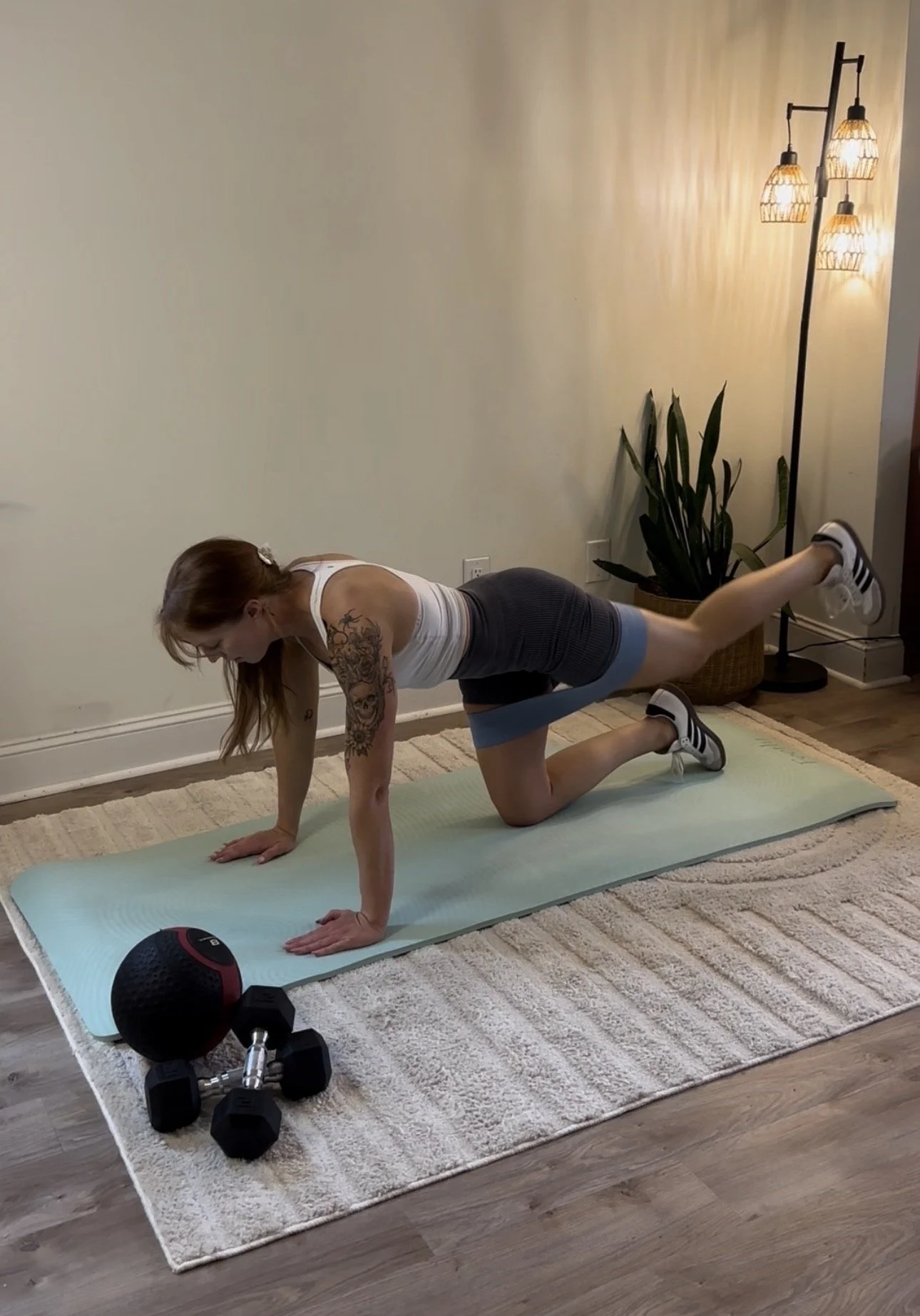
These are a staple in many of my workouts and classes.
Mini bands are excellent for glute activation, hip stability, and adding challenge to lower-body exercises without requiring a lot of equipment.
Exercise Mat
A quality mat makes floor exercises, stretching, mobility work, and core training much more comfortable.
If you're working out at home on hardwood, tile, or concrete, a good mat can make a huge difference in how enjoyable your workouts feel.
Suspension Trainer (TRX Style)
One of my personal favorites.
Suspension trainers are incredibly versatile and work well for beginners and advanced exercisers alike. They can help improve strength, balance, stability, and mobility while allowing you to easily modify exercises based on your ability level.
Adjustable Dumbbells
Adjustable dumbbells are a higher cost piece of equipment but great since they will adjust as you go.
They're versatile, space-efficient, and allow you to train every major muscle group. Whether your goal is building strength, improving muscle tone, increasing bone density, or simply feeling more capable in everyday life, dumbbells can help get you there.
Adjustable Bench
A bench opens up a huge variety of exercise options and allows you to perform many movements more comfortably and safely.
You don't need anything fancy. A sturdy adjustable bench can significantly expand your workout possibilities.
Kettlebell
If you enjoy strength and conditioning workouts, a kettlebell is a fantastic addition.
Kettlebells can be used for swings, squats, carries, presses, and countless other exercises that challenge strength, power, and coordination.
Foam Roller
Recovery often gets overlooked.
While foam rolling isn't a magic solution, it can be a helpful tool for improving mobility, reducing stiffness, and helping your body feel a little better between workouts.
Bonus Picks
These aren't necessarily the first pieces of equipment I'd buy, but they can be great additions once you've built a solid foundation.
Vibration Plate
If you know me - you know I love my vibration plate! :)
While I wouldn't rely on a vibration plate as my primary form of exercise, I do think it can be a useful tool for improving circulation, balance, recovery, and adding variety to your routine. I personally enjoy using one for mobility work, warm-ups, and recovery days.
Pull-Up Bar
A pull-up bar is one of the simplest and most effective pieces of equipment you can own.
Even if you're not ready for pull-ups yet, it can be used for dead hangs, grip strength, core exercises, and assisted pull-up progressions. Plus, it takes up very little space.
Step Platform or Plyo Box
A sturdy step platform or plyo box is one of the most versatile pieces of equipment you can add to a home gym.
It can be used for step-ups, split squats, elevated push-ups, box squats, mobility work, and cardio intervals. I often use step-ups with clients because they're functional, effective, and easy to modify for different fitness levels.
If you're considering a plyo box, I generally recommend starting with one that offers multiple height options so you can adjust it as needed.
Adjustable Ankle Weights
Ankle weights are a simple way to add resistance without taking up much space.
They're great for lower-body accessory work, core exercises, walking workouts, and glute-focused movements. While they aren't a replacement for traditional strength training, they can be a useful tool for adding challenge and variety to your workouts.
I especially like adjustable ankle weights because you can increase or decrease the resistance depending on the exercise and your fitness level.
Barbell and Weight Plates
For anyone serious about strength training, eventually you'll probably want a barbell.
Barbells come in a few different sizes and styles. Standard barbells typically use smaller weight plates and are often lighter, making them a good option for home gyms with limited space. Olympic barbells use 2-inch Olympic plates, are more durable, have a higher weight capacity, and are what you'll find in most commercial gyms.
The barbell we use at Ascend is a standard 7ft, 2in Olympic barbell, which weighs 45 pounds before any plates are added. If your goal is to build strength over time, an Olympic setup is usually the route I'd recommend since it gives you the most room to progress. We also use the 4ft mini bar from time to time (this would be great at home for different lifts).
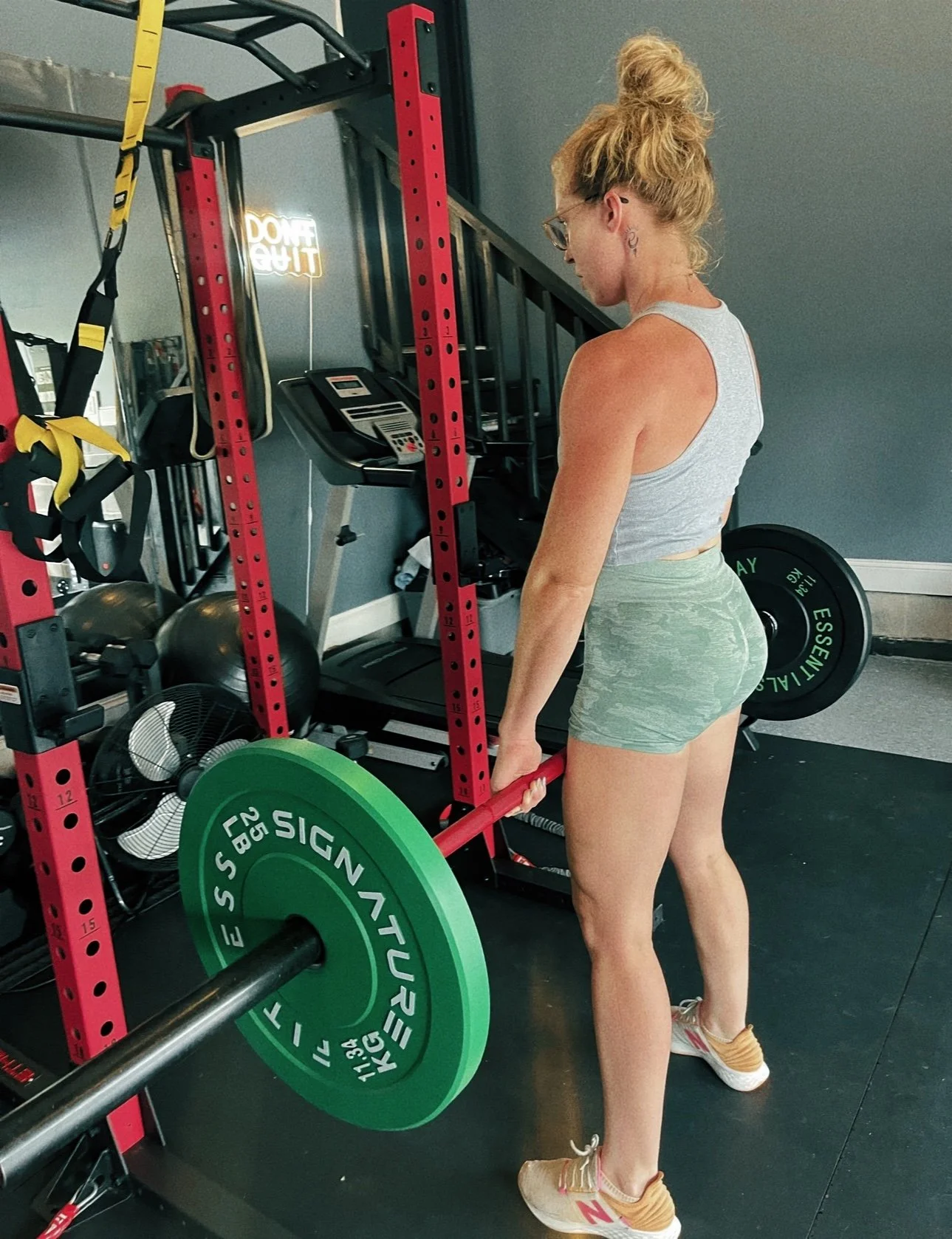
Squats, deadlifts, presses, rows, and countless other exercises can be performed with a barbell, making it one of the most versatile pieces of equipment you can own. I don't consider it a beginner purchase simply because of the cost, space requirements, and additional equipment needed, but it's an excellent addition for anyone looking to take their strength training to the next level.
What I'd Skip
Fitness trends come and go, but most people don't need a room full of specialty equipment.
If you're just getting started, I'd save your money on:
• Single-purpose ab machines
• Trendy gadgets that only do one exercise
• Large machines that take up significant space
• Very light dumbbell sets you'll outgrow quickly
• Equipment you don't genuinely enjoy using
In most cases, a few versatile tools will provide far more value than a dozen specialty products.
The Most Overlooked Piece of Equipment
This might sound surprising coming from someone writing a blog about equipment, but the most important part of any home gym isn't the equipment.
It's having a plan.
I've seen people get amazing results with a pair of dumbbells and a resistance band. I've also seen people spend thousands of dollars on equipment they barely touch.
The difference usually isn't the equipment itself. It's knowing what to do with it, how to progress, and how to make it fit your life.
A home gym should make fitness more accessible, not more overwhelming.
Start simple. Choose equipment you'll actually use. Focus on consistency over perfection. Build gradually as your goals and experience evolve.
And if you're not sure where to start, I'd be happy to help.
Whether you're working out at home, in a commercial gym, or somewhere in between, we can create a plan that fits your goals, schedule, and lifestyle.
